All calculators
Find calculators and unit conversions for circuit and PCB design.
-
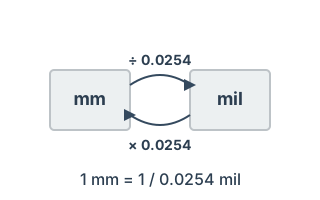
Convert mm to mil
Convert millimetres to mils instantly. 1 mm = 39.37 mil. The unit conversion you need for PCB trace width and clearance work, straight from the number you type.
-
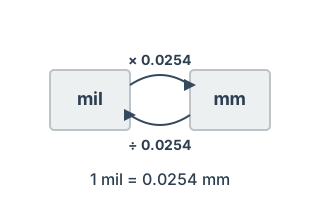
Convert mil to mm
Convert mils to millimetres instantly. 1 mil = 0.0254 mm. Common PCB values such as 4 mil and 30 mil are one keystroke away.
-
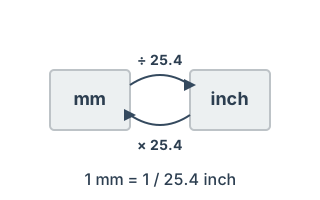
Convert mm to inches
Convert millimetres to inches. The unit conversion used in PCB layout and mechanical design, with the result as you type.
-
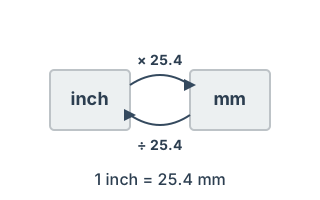
Convert inches to mm
Convert inches to millimetres. The unit conversion used in PCB layout and mechanical design, with the result as you type.
-
Capacitor code
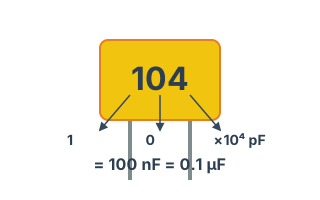
Read the 3-digit capacitor code and get the capacitance in µF. 104 = 0.1 µF, 472 = 4.7 nF, and so on.
-
Resistor code
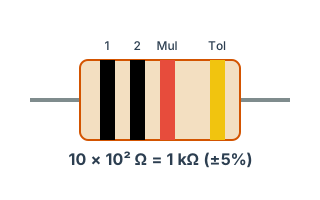
Read the 3-digit resistor code and get the resistance in kΩ. 103 = 10 kΩ, 472 = 4.7 kΩ, and so on.
-
Convert dB to ratio
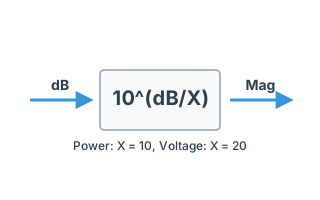
Convert decibels into a voltage ratio and a power ratio. −3 dB = 0.707×, 20 dB = 10×, all worked out as you type.
-
Convert voltage ratio to dB
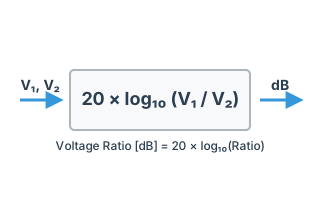
Convert a voltage ratio (V1/V2) into decibels. For amplifier gain and filter response measurements.
-
Convert power ratio to dB
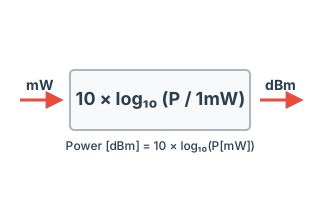
Convert a power ratio (P1/P2) into decibels. For RF and amplifier design work.
-
Frequency ⇔ wavelength
Convert between frequency and wavelength, including the permittivity of the board. For antenna length and PCB transmission line design.
-
RC filter — cutoff frequency
Work out the cutoff frequency of an RC filter from the resistance and capacitance, and pick component values for a low-pass filter.
-
Resistor voltage divider
Calculate the mid-point voltage of a resistor divider, including the maximum and minimum once component tolerances are taken into account.
-
LED circuit design
Calculate the current limiting resistor for an LED. Get the current and its spread from the supply, the Vf and the resistor value.
-
Power consumption from current and voltage
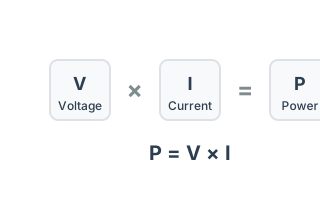
Work out power consumption from current, voltage and duty cycle. For sizing a supply and for PWM or pulsed circuits.
-
Power supply efficiency
Calculate the conversion efficiency of a DC-DC converter or power supply from its input and output voltage and current.
-
Inverting amplifier
Calculate the gain of an op-amp inverting amplifier from the ratio of the feedback resistor to the input resistor.
-
Capacitance for a pulse current
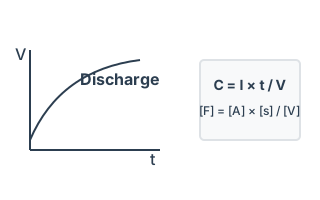
Calculate the capacitance needed to supply a pulse of current, from the output current, voltage and duration.
-
Electricity cost from rated power
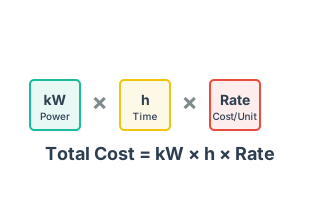
Estimate the running cost of a device from its rated power and hours of use. Get the cost per day, per month and per year.
-
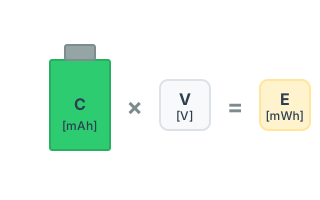
Convert battery capacity in mAh to Wh
Convert a battery capacity in mAh to energy in Wh. For IoT and portable device design.
-
Propagation speed on a PCB from permittivity
Calculate signal propagation speed on a PCB in ps/mm from the relative permittivity. For timing analysis in high-speed design.
-
Trace resistance, heating, inductance and parasitic capacitance
Calculate the resistance, inductance, dissipation and parasitic capacitance of a PCB trace. For high-current and high-speed design.
-
Via and through-hole parasitics
Calculate the parasitic inductance and capacitance of a PCB via. For return path design on fast signals and for decoupling.
-
Skin effect
Calculate skin depth — how far current penetrates a conductor at a given frequency.
-
Characteristic impedance — microstrip (outer layer)
Calculate the characteristic impedance of a microstrip line, single-ended and differential, and pick a trace width for your stack-up.
-
Lumped or distributed
Find the boundary between lumped and distributed behaviour: the limiting trace length for a frequency, or the limiting frequency for a length.
-
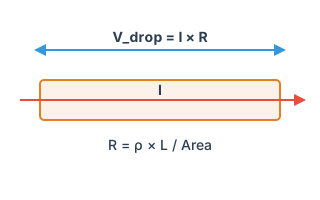
Voltage drop across a resistance
Calculate the voltage drop across a resistance from Ohm’s law, V = I × R, given the resistance and the current.
-
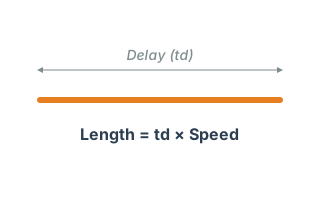
Convert delay time to trace length
Work out the trace length that corresponds to a given propagation delay. For length matching and skew adjustment.
-
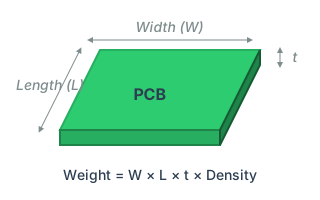
PCB weight
Calculate the weight of a printed circuit board. Get the laminate and copper mass from the outline size, layer count and copper thickness.
-
Convert oz to copper thickness
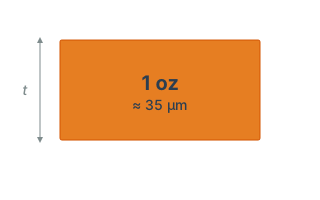
Convert PCB copper weight in ounces to thickness in µm and mm. 1 oz = 35 µm. For reading board specifications and setting up trace width rules.
-
Convert trace length to delay time
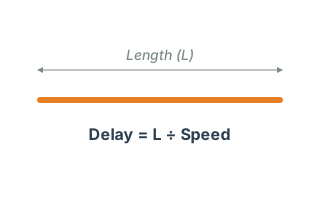
Calculate the propagation delay of a PCB trace from its length. For length matching and timing analysis.
-
Trace capacitance
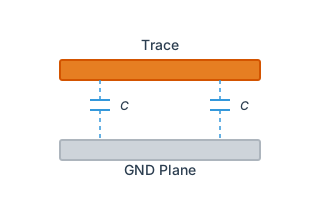
Calculate the parasitic capacitance of an inner-layer PCB trace (stripline) in pF. For signal integrity and filter design.
-
Synchronous buck converter: efficiency, ripple and waveforms
Calculate duty cycle, efficiency and output ripple for a synchronous buck converter, and see the inductor current and output ripple waveforms.
-
FPGA/MCU I/O Buffer Standards & Drive Strength
A reference on FPGA/MCU I/O buffer standards (LVCMOS, LVTTL and more), how Xilinx, TI, Renesas and STM32 configure them differently, plus a calculator that estimates rise time from drive current and load capacitance.